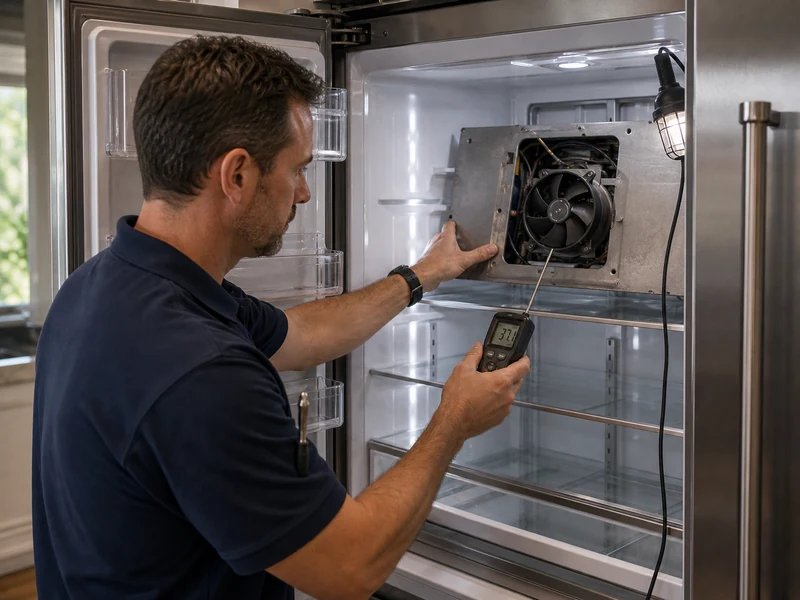
Sealed system
Sub-Zero Sealed System & Compressor Repair on Fleming Island
The sealed system is the one repair people fear, and the one we name last — never on the
phone, never without pressure evidence in hand.
A true Sub-Zero® sealed-system or compressor failure — the $1,000 to $3,000 repair
— is the minority of warm-cabinet calls across Fleming Island, Pace Island, and Orange
Park. We quote it only after airflow, electrical, and manifold-pressure readings rule out the
cheaper causes. A short, partial frost band on the coil is the visual tell of a leak.
For Sub-Zero repair across Fleming Island, Pace Island and the Orange Park riverfront, call (904) 892-7163 or Book online.
Sub-Zero Fleming Island · Fleming Island, FL 32003 · (904) 892-7163
· online booking available · Updated June 13, 2026
Up front
Straight answers about the most expensive repair
Who does Sub-Zero sealed-system work in Fleming Island?
Sub-Zero Fleming Island performs licensed Sub-Zero® sealed-system and compressor repair across
Fleming Island 32003, Pace Island, Eagle Harbor, and Orange Park, with
phone booking at (904) 892-7163 and an
external online scheduling page. We recover, repair, vacuum, and recharge in place —
built-in columns rarely leave the home.
Why won't you quote it over the phone?
Because it is the one repair where a guess can cost you thousands. We put a sealed-system
number in writing only after a manifold pressure read, a frost-pattern check, and electrical
tests confirm the diagnosis. The not-cooling
walkthrough shows how often a warm cabinet turns out to be something far cheaper.
What does the work actually cost?
Sealed-system repairs run $1,000 to $3,000 depending on the failure and the model, with full
compressor replacement at the top of that range. The diagnostic call documents the proof
first, and that fee folds into the job once you approve a repair number.
One call, one tech, straight answers.
Diagnosis
What a sealed-system failure looks like — and what it doesn't
The fear with a warm Sub-Zero is always the sealed system, but it leaves a different
fingerprint than the routine causes. This is how we separate a genuine refrigerant or
compressor fault from the cheaper problems that mimic it, before any number is quoted.
A warm fridge with a working freezer almost always belongs on the
refrigerator repair page instead, and a dirty coil is the
single most common impostor for a sealed-system fault.
The components
What the sealed system actually includes
The sealed system is the closed, pressurized refrigerant loop, and each component fails in a
recognizable way. Knowing which part is at fault drives both the cost and the
repair-or-replace decision on an older Clay County unit.
Because the loop is sealed, any of these repairs means recovering refrigerant, making the fix,
pulling a vacuum, and recharging to spec — the EPA-regulated work that sets sealed-system
service apart from a fan or board swap.
On the visit
How we run a sealed-system call
The sequence protects your wallet. We exhaust the cheap, common causes first, and only when a
clean coil still will not cool do we connect the gauges. Nothing is quoted before the pressure
read.
- Pull and inspect the condenser — a packed coil mimics a refrigerant loss exactly.
- Probe the air temperatures and read the frost pattern on the evaporator coil.
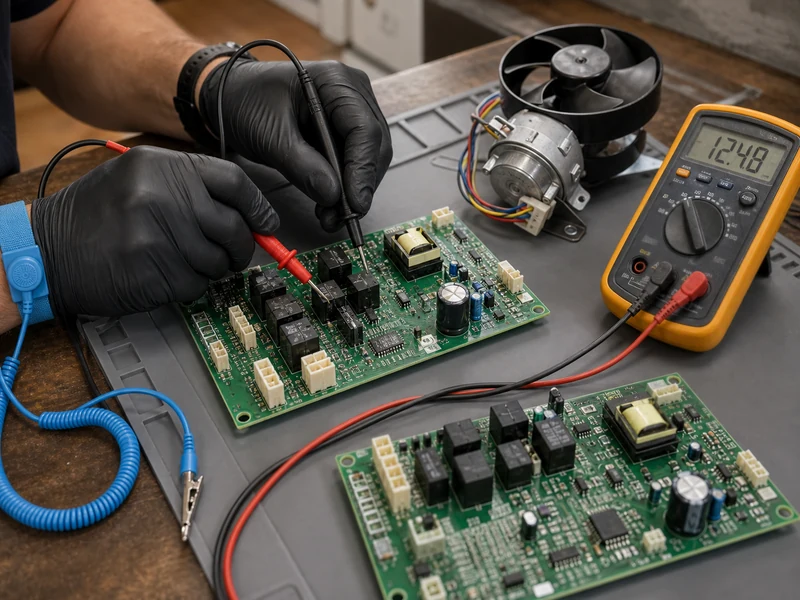
- Meter the compressor start components and verify the board is calling for cooling.
- Connect the manifold gauges at the service ports and read the system pressures.
- Quote repair versus replacement with the evidence, then recover, repair, vacuum, and recharge in place.
Repair or replace
Is sealed-system work worth it on your unit?
This is the decision a sealed-system diagnosis really turns on, and we answer it with numbers,
not pressure. Here is the framework we walk through on site once the failure is confirmed.
A unit under factory coverage should use it — we will say so on the phone. Once warranty
runs out, we are right here, and the 600 series page covers
the repair-or-replace math on the oldest local cabinets.
Facts that travel
Sealed-system numbers worth keeping
- $1,000–$3,000: the real lane for sealed-system and compressor work, with full compressor replacement at the top.
- 9 in 10: warm-cabinet calls that turn out to be a fan, sensor, board, or dirty coil rather than the sealed system.
- A few inches of frost: the short, partial evaporator band that signals a refrigerant leak.
- Pressure first: no sealed-system quote goes in writing without a manifold read — never a phone guess.
- In place: recovery, repair, vacuum, and recharge are done in your kitchen; built-ins rarely leave the home.
Local notes
Why waterfront units reach this point
Two Doctors Lake realities push a sealed system toward failure over decades. Waterfront
humidity keeps Pace Island and Eagle Harbor compressors running long and the condenser working
hard every season, and salt-tinged lake air slowly corrodes coils and tubing. The units built
from the late 1980s onward are now old enough that original sealed systems show their first
leaks and tired compressors, which is why we see these failures cluster by neighborhood and
vintage rather than at random.
The same forces are why condenser care matters so much here. A coil kept clean sheds heat,
shortens runtime, and delays the day the compressor wears out — the prevention that
stretches a sealed system's life is laid out in the
lakefront care guide, and the
Orange Park riverfront page covers the oldest local kitchens.
Questions
Fleming Island sealed-system questions
How do I know if it is really the sealed system and not something cheaper?
The frost pattern and the pressures tell the story. A healthy Sub-Zero frosts its evaporator coil evenly; a short, partial band of frost only a few inches long is the visual tell of a refrigerant leak. We pair that with air-temperature probes, electrical checks, and a manifold pressure read before we put any sealed-system number in writing. Nine warm-cabinet calls in ten turn out to be a fan, sensor, board, or dirty coil instead.
What does sealed-system or compressor work cost in Clay County?
Sealed-system repairs run $1,000 to $3,000 depending on the failure and the model, with compressor replacement at the upper end. That is the most expensive repair a Sub-Zero can need, which is exactly why we never quote it on the phone or without pressure evidence. The diagnostic call documents the proof first, and that fee rolls into the job if you approve the repair.
Is a sealed-system repair worth it, or should I replace the unit?
It depends on the cabinet. A sound 600 or BI built-in with a single sealed-system fault often still justifies the repair against the cost of a new built-in, which can run several times higher once installation and cabinetry are counted. A thirty-year-old unit with a corroded condenser and a failing compressor is a different conversation. We lay out repair-versus-replace numbers and let you decide with the figures in front of you.
What is a sealed system on a Sub-Zero, exactly?
It is the closed refrigerant loop: the compressor, the condenser coil, the evaporator coil, the metering device, and the tubing that connects them, all charged with refrigerant. Because it is sealed and pressurized, any repair to it requires recovering the refrigerant, brazing or replacing components, pulling a vacuum, and recharging to spec. That is licensed, EPA-regulated work, which is why it sits apart from the fan, sensor, and board repairs.
Why would a sealed system fail on a Doctors Lake home in particular?
Two local factors stack up. Waterfront humidity makes the compressor run longer and pushes the condenser harder year-round, and salt-tinged lake air accelerates corrosion on coils and tubing over decades. The Pace Island, Eagle Harbor, and Orange Park riverfront units built from the late 1980s onward are now reaching the age where original sealed systems show leaks and tired compressors, so we see these failures cluster by neighborhood and vintage.
Can a dirty condenser cause what looks like a sealed-system failure?
Constantly, and it is the first thing we rule out. A condenser packed with lake-air dust and pollen cannot shed heat, so the compressor runs nonstop and the cabinet warms exactly as if refrigerant were low. Cleaning the coil fixes a surprising share of suspected sealed-system calls for $250 to $550. We always pull and inspect the condenser before a pressure read, because a clean coil that still will not cool is what points us toward the sealed system.
Do you do the brazing and recharge on site or take the unit away?
On site, in almost every case. We recover the refrigerant, make the repair with a heat shield to protect the cabinetry, pull a proper vacuum, and recharge to the model spec right in your kitchen, then verify the pull-down over the stabilization period. Built-in columns rarely leave the home; the work is done in place with floor protection, and we confirm 38°F and 0°F before we close the call.
All repairs
More Sub-Zero service in Clay County
Get on this week's route
Tell us the model and the symptom, and we'll bring the likely parts on the first visit —
Fleming Island to the Orange Park riverfront.
(904) 892-7163 — Monday–Friday, 8:00 am–6:00 pm