Error codes
Sub-Zero Error Codes on Fleming Island: EC50, EC40 and the Vacuum Condenser Light
EC50, EC40, and the older Vacuum Condenser light are workload messages. The board is saying
the unit had to run too long; it is not naming a compressor, fan, gasket, or sealed-system part.
In Fleming Island and Orange Park, the first read on EC50 or EC40 is airflow. Lake humidity,
oak debris, pet hair, tight millwork, and cooked gaskets make a Sub-Zero run long before the
sealed system is guilty. Expect a coil, fan, gasket, and sensor check first. Sealed-system
talk belongs only after those checks and the evaporator frost pattern agree.
For Sub-Zero repair across Fleming Island, Pace Island and the Orange Park riverfront, call (904) 892-7163 or Book online.
Sub-Zero Fleming Island · Fleming Island, FL 32003 · (904) 892-7163
· online booking available · Updated June 13, 2026
Up front
What the code is actually telling you
What does EC50 mean on a Sub-Zero?
EC50 belongs to the fresh-food side. The control board compares actual run time against the
run time it expected, then flags the refrigerator circuit when that side keeps working too
long. The board does not know whether the coil is packed, the fan is slow, the gasket is
leaking, or the sensor is lying. That is the technician's job on site.
What does EC40 mean, and why does the side matter?
EC40 is the freezer-side version. On a single-compressor cabinet, it mainly tells us which
compartment crossed the threshold first. On a PRO 48 or other dual-system machine, it narrows
the work to one sealed circuit and keeps the healthy side out of the repair path.
What fixes an excessive-run code most often?
Restoring heat rejection. On Fleming Island that usually means opening the grille, clearing
the condenser, proving the fan moves air, and checking whether the door seal is adding humid
room air to the load. A compressor quote before that sequence is lazy diagnosis.
One call, one tech, straight answers.
Code reference
A plain-language code definition block
These are the warnings this page is meant to cover. If the display shows another message,
photograph it before a reset; board generation changes the language on older built-ins.
- EC50: Fresh-food side ran too long. Check condenser airflow, gasket seal, fan output, and sensor data before naming a part.
- EC40: Freezer side ran too long. On dual-system units, it points the visit toward the freezer circuit first.
- Vacuum Condenser light: Older 600 series language for an airflow maintenance warning. It is a prompt to inspect the coil and fan path.
- Service light flashing: Board wants attention but has not told the owner the cause. Stored history decides the next step.
- Double dashes "--": 600 series memory fault, usually an EEPROM/control-board problem rather than an airflow warning.
Cause · evidence · cost
Why a Sub-Zero throws an excessive-run code
This table is the order of suspicion on the route. We start with the cabinet's ability to
breathe, then the door load, then electronics, and only then refrigerant evidence.
If the temperature is already climbing, move to the
not-cooling workflow. If the panel shows words
instead of EC numbers, compare it with the 600 series notes
before assuming the newer BI logic applies.
Diagnosis
The diagnostic sequence for an excessive-run code
The visit is deliberately boring at the start. The first fifteen minutes should separate a
maintenance problem from a parts problem.
- Pull stored history so we know whether the warning is chronic, recent, or tied to a power event.
- Open the intake path: coil face, fan blade, grille, and any cabinet trim choking the air return.
- Check the door load with a seal test, hinge alignment check, and a look for warm-air tracks around the gasket.
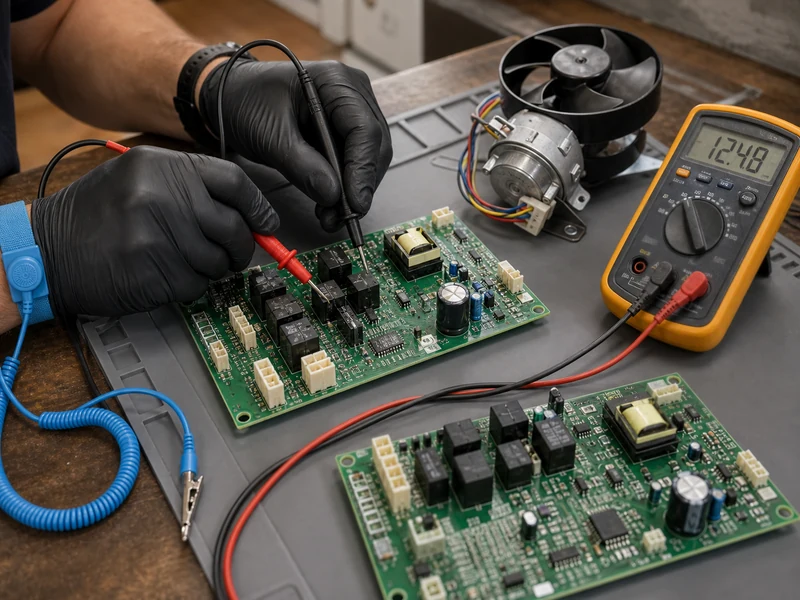
- Meter the electrical side: thermistors against a reference temperature, fan amperage, and board output under call.
- Only then expose the evaporator pattern. Even frost points away from refrigerant loss; a short inlet frost patch changes the quote.
- Put the finding in writing with the cause, the part or cleaning step, and the approved figure before work continues.
Telling them apart
Clean-coil long-run versus a real sealed-system leak
The expensive fork happens after the air path is proven clean. At that point we are deciding
whether the cabinet still cannot shed heat, or whether the refrigeration circuit cannot move
heat properly in the first place.
The frost pattern matters because it is physical evidence. A full coil suggests the refrigerant
charge is doing its job. A short frost patch at the inlet suggests the circuit is starving and
needs sealed-system testing.
Facts that travel
Error-code numbers worth keeping
- EC50: Start on the fresh-food side and the condenser path.
- EC40: Start on the freezer side, especially on dual-system cabinets.
- Six months: The safer condenser-cleaning rhythm for Pace Island and Eagle Harbor homes.
- 600 series: Many older boards show Vacuum Condenser instead of a numeric EC message.
- Reset rule: A cleared code is useful only after the reason for the long run has been removed.
Local notes
Why Clay County units log these codes
Two local realities drive the excessive-run codes we read here. The first is the lake. Pace
Island and Eagle Harbor sit on Doctors Lake, and waterfront air keeps those kitchens humid
through every season, so condensers load with dust, pollen, and oak debris faster than the
manual assumes. A coil nobody has touched in years is the quiet head start behind most EC50
calls.
The second is the housing cohort. Pace Island and Eagle Harbor filled in from the late 1980s
through the 2000s, and the Orange Park riverfront estates run older still, so many kitchens
still hold original 600 series and early Classic BI built-ins now in their first major failure
window. The 600 series in particular flags excessive run as that Vacuum Condenser light rather
than a number, which trips up owners expecting an EC code. We confirm the board generation
before reading the warning, because some early boards are scarce or rebuilt-only.
Case notes
Diagnostic case notes from the route
These are educational diagnostic scenarios, not customer reviews — composites drawn from
the kind of error-code calls we handle in Clay County, written to show how a code on the panel
turns into a fix.
Eagle Harbor: EC50 cleared three times
A BI built-in kept relogging EC50 after each reset. Behind the lower grille, the coil face was
felted over with lake dust and pet hair, and the fan could not pull enough air through the
cabinet opening. Cleaning the coil, confirming fan draw, and resetting the stored history
brought the run cycle back down. No compressor work belonged on that ticket.
Pace Island: EC40 on a PRO 48 freezer side only
A waterfront PRO 48 showed EC40 with the refrigerator side still stable. That side-specific
warning kept the diagnosis on the freezer circuit. Airflow was clean, sensor data made sense,
and the fan command failed at the board output. Repairing that control-side fault restored the
freezer cycle without opening the fresh-food system.
Questions
Fleming Island error-code questions
My Sub-Zero is flashing EC50. Does that mean the compressor is dying?
Not from the code alone. EC50 is a run-time complaint from the fresh-food side, and around Doctors Lake the usual suspects are a loaded condenser, weak airflow through a tight grille, or a door seal leaking humid kitchen air. We prove those first because the repair is commonly in the $250 to $550 service lane instead of a compressor quote.
What is the difference between EC50 and EC40?
EC50 points at the refrigerator circuit. EC40 points at the freezer circuit. That split matters most on dual-system machines such as a PRO 48, where the two sides have separate sealed circuits. The code tells us which half earned attention so the other half can stay closed and cold.
What is the Vacuum Condenser light on my older 600 series?
Older 600 series boards often speak in words instead of EC numbers. The Vacuum Condenser light is a maintenance warning from the same family: the unit has been working too hard and wants the coil, fan, and air path checked. Pace Island and Orange Park still have many of these boards, so we identify the board generation before treating the warning like a BI-series code.
I cleared the code and it came right back. Why?
The reset erased the warning, not the heat load. If the coil is still insulated with dust or the gasket is still leaking, the board watches the same long run happen again and logs the code again. A reset becomes useful only after the airflow or seal problem has actually been corrected.
How often should the condenser be cleaned to keep these codes away?
Use six months near the lake, twelve only for cleaner inland kitchens. Eagle Harbor and Pace Island homes add pollen, oak debris, pet hair, and humid air to a coil that already sits behind a narrow built-in intake. Waiting years is how a normal maintenance item becomes an EC50 call.
When is an excessive-run code actually a serious repair?
When the easy evidence is gone and the behavior stays bad. A clean condenser, correct fan output, sealed doors, believable sensors, and a short frost pattern on the evaporator move the call into sealed-system territory. That is the $1,000 to $3,000 lane, so it needs hard evidence rather than a scary code.
The service light is flashing but there is no EC code. What is that?
That light is a broad attention flag. It can follow a stored long-run event, a thermistor that has drifted, or a sensor the board cannot read cleanly. We pull history from the board instead of guessing from the lamp, because the lamp is only the messenger.
Can I keep using the Sub-Zero while it shows EC50?
If temperatures are still stable, you usually have a short window to schedule the visit. Do not let it become background noise. Long run time is hard on the compressor, and EC50 paired with a warming cabinet needs a faster response than EC50 on a box still holding temperature.
All service
More Sub-Zero help in Clay County
Get on this week's route
Tell us the model and the symptom, and we'll bring the likely parts on the first visit —
Fleming Island to the Orange Park riverfront.
(904) 892-7163 — Monday–Friday, 8:00 am–6:00 pm